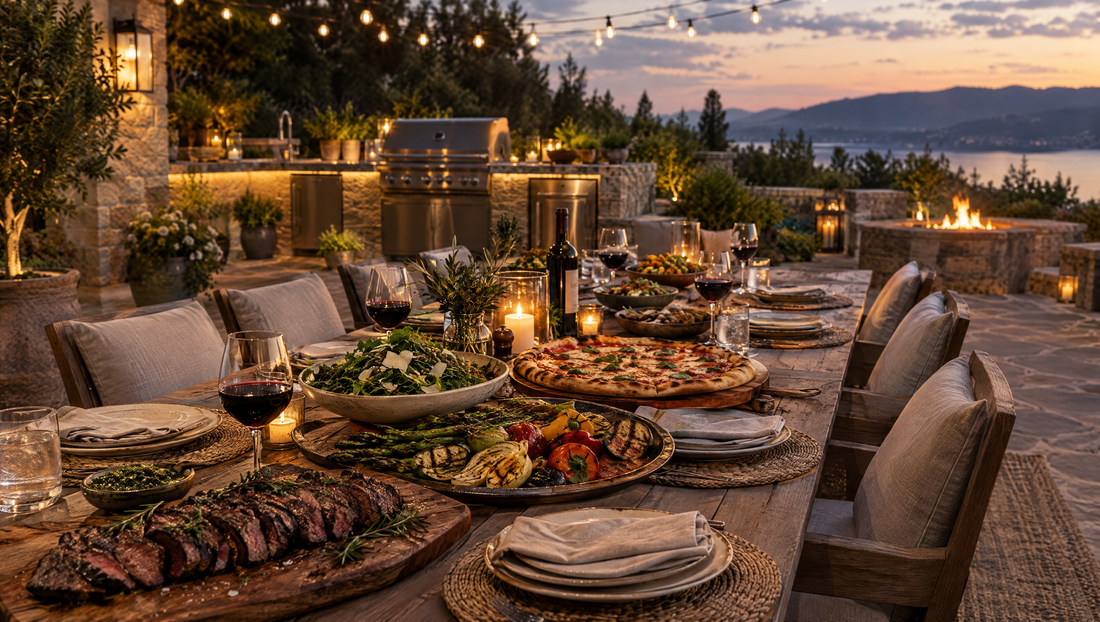

An outdoor kitchen turns your backyard into the place everyone wants to be. Done right, it adds living space, makes entertaining easier and gives you a reason to cook outside all season long. Done wrong, it becomes an expensive grill station nobody uses. This guide walks you through the decisions that matter most, in the order you should make them.
1. Start With How You Like to Cook and Host
Before you look at a single appliance, think about how you actually use your backyard. Do you host big weekend cookouts, quiet dinners for two, or pizza nights with the kids? Do you sear steaks, smoke brisket low and slow, or cook breakfast on a griddle? Your cooking style decides your centerpiece appliance, and everything else is built around it.
- Grill-first cooks usually anchor the kitchen with a built-in gas grill.
- Pizza lovers plan around a pizza oven with landing space on both sides.
- Barbecue enthusiasts often add a pellet grill or smoker next to the main grill.
2. Choose Your Layout
Most outdoor kitchens follow one of four layouts:
- Straight run: a single island along a wall or patio edge. Simple, affordable and perfect for smaller spaces.
- L-shape: adds a second run for prep or bar seating and creates a natural work triangle.
- U-shape: wraps around the cook for maximum counter space. Ideal for serious entertainers.
- Island with bar: a raised counter on the guest side keeps people close without crowding the cook.
Plan at least 24 inches of open counter on one side of your grill and 12 inches on the other. You will use every inch of it for platters, tools and drinks.
3. Pick Your Fuel Type Early
Natural gas is the most convenient choice if you already have a line nearby, and it means no tank swaps. Propane offers flexibility in placement. Wood and charcoal deliver unbeatable flavor but need more attention. Deciding on fuel early matters because it affects plumbing, venting and which appliances you can choose. Many homeowners combine a gas grill for weeknights with a wood-fired pizza oven for weekends.
4. Add the Components That Make It a Kitchen
The difference between a grill station and a true outdoor kitchen is everything around the grill. Consider:
- Outdoor refrigerators and beverage centers so you are not running inside for drinks.
- Side burners for sauces, sides and boiling corn.
- An outdoor sink for prep and easy cleanup.
- Storage drawers and access doors for tools, propane and utilities.
- A vent hood if your kitchen sits under a roof or pergola.
5. Choose Materials Built for the Outdoors
Everything in an outdoor kitchen faces sun, rain, heat and temperature swings. Look for 304 stainless steel appliances, outdoor-rated refrigeration and weather-resistant counters such as granite or sealed concrete. Stone veneer and stucco bases look great and hold up well. Modular stainless kitchens and prefab BBQ islands are a faster, more affordable alternative to a fully custom masonry build.
6. Set a Realistic Budget
A well-equipped outdoor kitchen typically includes a grill, at least one refrigeration unit, storage and counter space. Prioritize the centerpiece appliance and add components over time if needed. Choosing a prefab island can significantly reduce installation costs while still delivering a high-end look.
7. Protect Your Investment
Fitted grill covers and regular cleaning will keep your equipment looking and performing like new for years. Cover appliances when not in use, especially during winter.
Need Help Planning?
Our team helps homeowners plan outdoor kitchens every day. Tell us about your space, your cooking style and your budget, and we will help you choose the right equipment. Contact us or call (888) 712-0281, Monday to Friday, 9:00 AM to 5:00 PM MT.